
Hungry Bowls
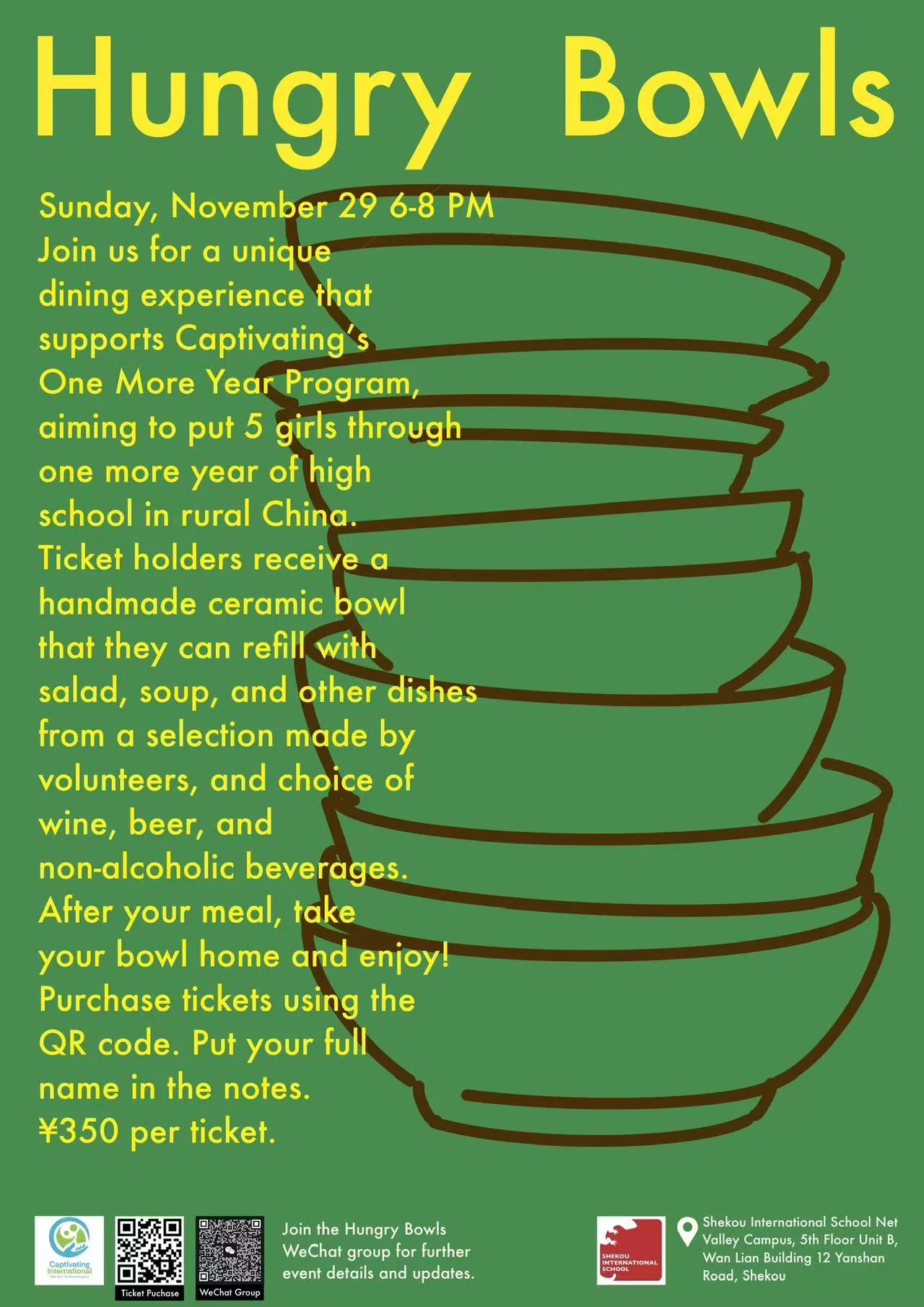
If you’re in Shenzhen on November 29th, this is a fun event. You’ll meet some people, eat delicious food, take home a ceramic bowl and support a worthy cause. 6-8 PM.
History and origins
The roots of Hungry Bowls-style events lie in the Empty Bowls movement, which began in the United States in 1990. Art teacher John Hartom and his students at Lahser High School in Bloomfield Hills, Michigan, organized a hunger-relief project. Students made ceramic bowls for a fundraising meal. The project developed through Hartom and fellow ceramic artist Lisa Blackburn, then spread to schools, pottery studios, universities, community arts organizations and charitable groups in the United States and internationally. Local versions adopted names including Hungry Bowls, Bowls for Hunger and Soup Bowls for Charity.
1990 The Empty Bowls project begins
Purpose and philosophy
Addressing hunger Events raise funds for food banks, community kitchens, food distribution programs and other organizations supporting people experiencing food insecurity. Promoting awareness A simple meal and a handmade bowl encourage reflection on hunger, unequal access to food and the importance of community support. Connecting art with responsibility Ceramic artists, students, teachers and volunteers contribute their skills and creativity toward a shared humanitarian objective. The philosophy is that art can do more than communicate ideas or provide aesthetic experiences. It can encourage empathy, strengthen communities and contribute to meaningful social action.
How a Hungry Bowls event works
1 Making Potters create and donate individually designed and finished ceramic bowls.
2 Exhibition and selection Finished bowls are displayed for visitors to admire and select; the presentation celebrates artistry.
3 Sharing a meal Guests make a donation or purchase a ticket, receive a meal and keep their selected bowl.
4 Giving back Funds go to a designated relief organization. The bowl remains a tangible reminder of the cause and the event.
Education and food security
Higher levels of secondary and post-secondary education can strengthen an individual's food security. More opportunity Education develops knowledge, skills and qualifications that can improve access to consistent employment, higher earning potential and financial stability. Everyday choices It can help people afford nutritious food and make informed decisions about nutrition, budgeting and household resources. Long-term resilience Critical thinking, problem-solving and awareness of social support systems can help people navigate rising food costs, unemployment and financial hardship
A tradition of art and action
Hungry Bowls events are local adaptations of a wider tradition. Events using this name may have independent histories, beneficiaries and organizing groups; Hungry Bowls is not necessarily one internationally coordinated organization
Share this event